
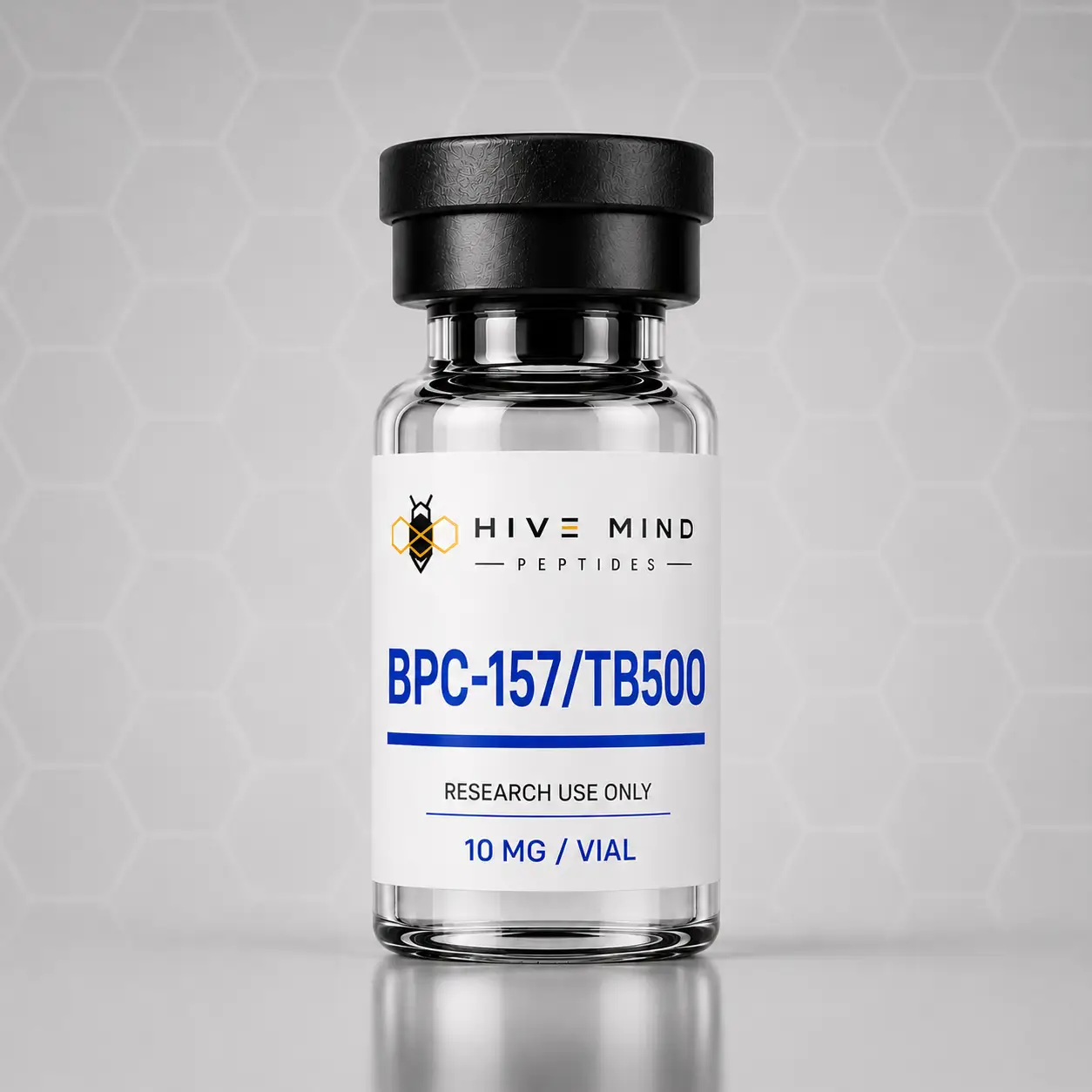
BPC-157/TB500 “Wolverine”
$80.00
For research use only. Wolverine is a dual-peptide research blend combining BPC-157 and TB-500 (Thymosin Beta-4 fragment), supplied for laboratory investigation of combinatorial peptide interactions across complementary cellular signaling pathways.
| FORM | PURITY |
|---|---|
| Lyophilized Powder | ≥99% (HPLC) |
BPC-157/TB500 “Wolverine” For Laboratory Research
For In Vitro Research Use Only – Not for Human or Veterinary Application
Wolverine combines two of the most studied peptides in preclinical research — BPC-157 and TB-500 — into a single research formulation for investigators studying the biochemical intersection of their respective signaling pathways.
BPC-157 (pentadecapeptide, Gly-Glu-Pro-Pro-Pro-Gly-Lys-Pro-Ala-Asp-Asp-Ala-Gly-Leu-Val) has been studied for its interactions with the nitric oxide system, VEGF signaling, and FAK-paxillin pathway activity. TB-500 is a synthetic analog of the active region of Thymosin Beta-4 (Tβ4), a ubiquitous 43-amino acid intracellular peptide. Research into TB-500 has focused on its role in actin sequestration, regulation of cell migration and differentiation, and its involvement in endothelial and inflammatory cell signaling.
The combination provides a research tool for examining potential additive or complementary interactions between these two biochemically distinct peptides within controlled in vitro models. Tested in the USA for research and educational use.
Compound Details
| Blend Components | BPC-157 (Body Protection Compound-157) + TB-500 (Thymosin Beta-4 analog) |
| BPC-157 CAS | 137525-51-0 |
| TB-500 CAS | 77591-33-4 |
| BPC-157 MW | 1,419.56 g/mol |
| TB-500 MW | 4,963.5 Da |
| Purity | ≥99% by HPLC (each component) |
| Appearance | White lyophilized powder |
| Solubility | Sterile bacteriostatic water |
| Storage | −20°C long-term; 4°C short-term (≤4 weeks lyophilized) |
| For Use | Laboratory and in vitro research purposes only |
Public Research References
Published Research References
- Sikiric P, Seiwerth S, Rucman R, et al. Stable gastric pentadecapeptide BPC 157: novel therapy in gastrointestinal tract. Curr Pharm Des. 2011;17(16):1612–1632. PMID: 21548867 →
- Goldstein AL, Hannappel E, Kleinman HK. Thymosin beta4: actin-sequestering protein moonlights to repair injured tissues. Trends Mol Med. 2005;11(9):421–429. PMID: 16099219 →
- Gwyer D, Wragg NM, Wilson SL. Gastric pentadecapeptide BPC 157 and its role in accelerating musculoskeletal soft tissue healing. Cell Tissue Res. 2019;377(2):153–159. DOI →
- Sosne G, Qiu P, Goldstein AL, Wheater M. Biological activities of thymosin beta4 defined by active sites in actin and copper binding domains. FASEB J. 2010;24(7):2144–2151. PubMed →
- Ho EN, Kwok WH, Lau MY, et al. Doping control analysis of TB-500 in equine urine and plasma by liquid chromatography-mass spectrometry. J Chromatogr A. 2012;1265:57–69. PubMed →
All references are provided for informational purposes. Products are for laboratory and scientific research purposes only. Not for human or animal consumption.
RESEARCH USE ONLY
All products sold by Hive Mind Peptides are intended strictly for laboratory and scientific research purposes only. These materials are not approved by the FDA and are not intended for human or veterinary use, clinical applications, diagnostic procedures, or therapeutic treatment of any kind. You must be 21 years of age or older to purchase.
By purchasing from Hive Mind Peptides, you confirm that you are a qualified researcher and that all materials will be handled solely within an appropriate research environment by personnel who understand the risks, limitations, and regulatory requirements associated with investigational compounds. Products must not be administered to humans or animals, represented as therapeutic agents, or used for any medical purpose.
Use of these materials is entirely at your own risk. Hive Mind Peptides assumes no liability for misuse, unsafe handling, improper application, or any regulatory or compliance issues arising from their use.

