
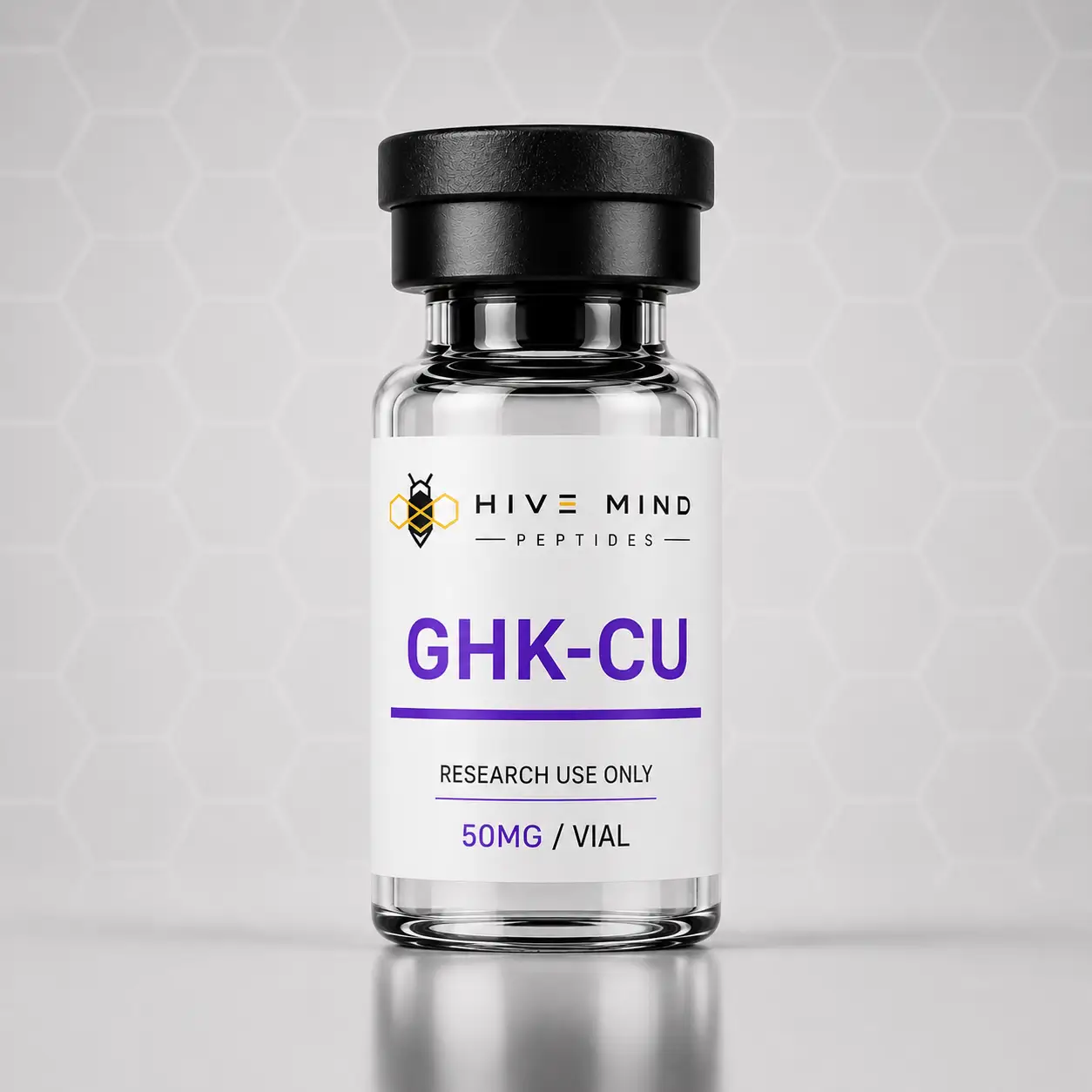
GHK-CU
Original price was: $55.00.$34.99Current price is: $34.99.
36% Off
GHK-Cu (Glycyl-L-Histidyl-L-Lysine : Copper) is a naturally occurring human plasma tripeptide with high copper(II) affinity, supplied for controlled laboratory research in metallopeptide biology and cellular signaling.
| FORM | PURITY |
|---|---|
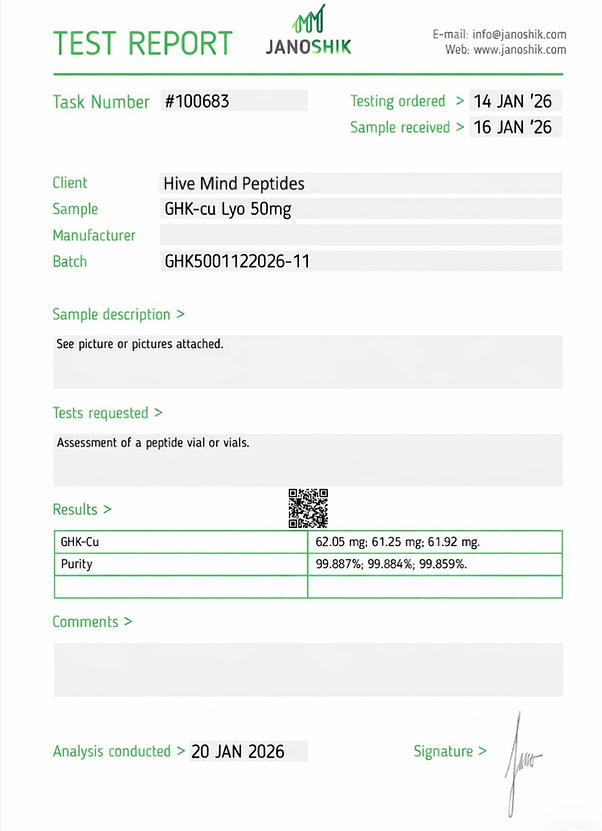
| Lyophilized Powder | ≥99% (HPLC) |
30-Day Free Returns – Ships Next Day
GHK-CU For Laboratory Research
GHK-Cu (Glycyl-L-Histidyl-L-Lysine : Copper²⁺) is a tripeptide-copper complex first identified in human plasma, where it is believed to play a role in copper transport and tissue remodeling signaling. Its high affinity for copper(II) ions — due to the histidine residue’s imidazole group — has made it a well-characterized subject in coordination chemistry and metallopeptide research.
Published laboratory research has investigated GHK-Cu’s influence on fibroblast activation, collagen and glycosaminoglycan synthesis, and superoxide dismutase activity. Additional studies have explored its interaction with TGF-β signaling pathways and its apparent ability to modulate gene expression profiles in human fibroblast cell lines. Its dual role as a copper chelator and peptide signaling molecule positions it as a compound of interest at the intersection of metallobiology, redox biochemistry, and cellular regulation research.
Tested in the USA for research and educational use.
Compound Details
| Full Name | Glycyl-L-Histidyl-L-Lysine Copper Complex |
| CAS Number | 89030-95-5 (Cu complex); 49557-75-7 (free peptide) |
| Molecular Formula | C₁₄H₂₂CuN₆O₄ (Cu complex) |
| Molecular Weight | 340.38 g/mol (free peptide); 403.91 g/mol (Cu complex) |
| Sequence | Gly-His-Lys |
| Purity | ≥99% by HPLC |
| Appearance | Blue-green powder (copper complex) |
| Solubility | Sterile water or sterile saline; dissolves readily |
| Storage | −20°C long-term; 4°C short-term (≤4 weeks); avoid oxidizing agents |
| For Use | Laboratory and in vitro research purposes only |
Public Research References
Published Research References
- Pickart L, Margolina A. Regenerative and Protective Actions of the GHK-Cu Peptide in the Light of the New Gene Data. Int J Mol Sci. 2018;19(7):1987. PMC6073405 →
- Pickart L, Vasquez-Soltero JM, Margolina A. GHK Peptide as a Natural Modulator of Multiple Cellular Pathways in Skin Regeneration. Biomed Res Int. 2015;2015:648108. PMC4508379 →
- Pickart L, Thaler MM. Tripeptide in human serum which prolongs survival of normal liver cells and stimulates growth in neoplastic liver. Nat New Biol. 1973;243(124):85–87. PMID: 4512841 →
- Gorouhi F, Maibach HI. Role of topical peptides in preventing or treating aged skin. Int J Cosmet Sci. 2009;31(5):327–345. PMID: 19594845 →
- Pickart L, Vasquez-Soltero JM, Margolina A. The human tripeptide GHK-Cu in prevention of oxidative stress and degenerative conditions of aging: implications for cognitive health. Oxid Med Cell Longev. 2012;2012:324832. PMID: 22685618 →
All references are provided for informational purposes. Products are for laboratory and scientific research purposes only. Not for human or animal consumption.
RESEARCH USE ONLY
All products sold by Hive Mind Peptides are intended strictly for laboratory and scientific research purposes only. These materials are not approved by the FDA and are not intended for human or veterinary use, clinical applications, diagnostic procedures, or therapeutic treatment of any kind. You must be 21 years of age or older to purchase.
By purchasing from Hive Mind Peptides, you confirm that you are a qualified researcher and that all materials will be handled solely within an appropriate research environment by personnel who understand the risks, limitations, and regulatory requirements associated with investigational compounds. Products must not be administered to humans or animals, represented as therapeutic agents, or used for any medical purpose.
Use of these materials is entirely at your own risk. Hive Mind Peptides assumes no liability for misuse, unsafe handling, improper application, or any regulatory or compliance issues arising from their use.

